See a hairstyle before the haircut
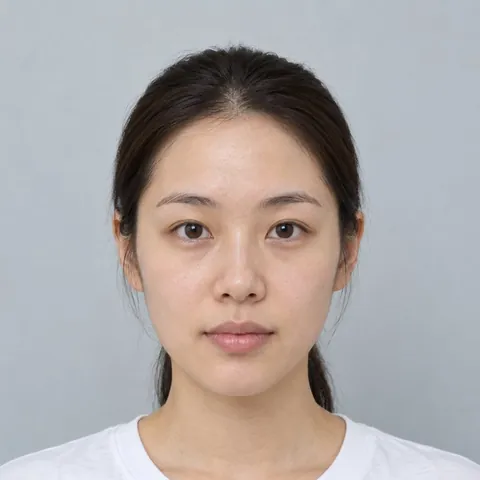
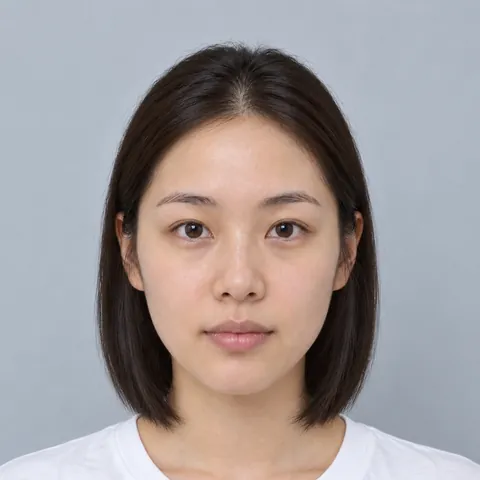
Existing demo images. A styling simulation, not a prediction. The report includes 6 optional AI renders; each is generated on request.
An oblong face is long for its width, with the forehead, cheekbones and jaw at roughly the same width. It is the mirror image of round, and so is the advice: add horizontal, take away vertical. Here is what that means in cuts, for women and for men.
Face length divided by cheekbone width sits around 1.62, well above the reference oval of 1.45. Jaw over cheekbone is about 0.80 and forehead over cheekbone about 0.88, the same as oval: the widths are in proportion to each other, the face is simply longer. On the mesh, all three thirds (hairline to brow, brow to nose base, nose base to chin) run long, and the middle third often runs longest.
So the problem is a single axis. Nothing about the widths needs correcting; the length does. Every cut that works for an oblong face either adds width at the sides, hides part of the length behind a fringe, or both. Every cut that fails does the reverse: it stacks height on top or lets straight hair hang flat against the cheeks, narrowing the face and stretching it further.
Oblong is also easy to over-diagnose. A tall forehead or a long chin on an otherwise oval face can make it feel long without the ratio actually crossing 1.5. The face shape tool measures it; if it reports oval leaning oblong, use this guide with a lighter hand.
Horizontal in, vertical out. Width at the sides, volume that starts at the temples, waves and curls, and a fringe that covers some forehead all add horizontal or subtract vertical. Height on top, slicked-back hair, long straight lengths and a centre part with no fringe all do the opposite. This is exactly the round face advice with every sign flipped.
| Cut | What it is | What it fixes |
|---|---|---|
| Shoulder waves + curtain fringe | Waves from the temples down, fringe on top | The most complete answer: width at the sides, an inch off the forehead, and no long vertical line |
| Brow-length fringe | Straight or lightly textured, at the brow | Shortens the visible face more than any other single change. The one shape where a heavier fringe is an asset |
| Chin or jaw-length bob | Blunt line at the chin | The bob round faces avoid is the one this face should consider — a horizontal at the bottom |
| Layers from the cheekbone | Start at the cheekbone, ends flicked out | Puts width where the face needs it. Inward ends pinch the face narrower |
| Curls or a perm | Volume down the sides, top kept flat | Side volume is a gift to a long face. Short curly cuts at the jaw work especially well |
| Side part, deep sweep | Hair swept across the forehead | Behaves like a fringe. Better than a centre part, which draws a long vertical down an already long face |
| Low, loose updos | At the nape, loose at the sides | A high tight bun is the one updo to avoid here |
| Half-up, top kept flat | Flat crown, wavy loose half | Do not add height at the crown — that is the one thing this face already has |
The most complete answer for an oblong face. The waves add width from the temples down; the curtain fringe takes an inch or two off the forehead; the shoulder length stops the hair from becoming a long vertical line. If you take one cut from this page, take this one.
A straight or slightly textured fringe that sits at the brow shortens the visible face more than any other single change. Oblong is the one shape where a heavier fringe is an advantage rather than a risk. Keep it soft at the edges so it does not look like a helmet.
The bob that round faces should avoid is the bob oblong faces should consider. A blunt line at the chin adds a horizontal at the bottom of the face and visually closes the length. Add a fringe and it works even better.
Face-framing layers beginning at the cheekbones, not the chin, put width where the face needs it. Flick the ends outward rather than inward; inward-curving ends narrow the face.
Volume all the way down the sides is a gift to a long face. Keep the top relatively flat and let the sides be as full as they like. Short curly cuts that sit at the jaw are especially good.
A side part with the hair swept across the forehead behaves like a fringe: it covers forehead and adds a diagonal. Better than a centre part, which draws a long vertical line straight down the middle of an already long face.
If you put your hair up, keep it low at the nape and loose at the sides, with some pieces left out around the face. A high, tight bun is the updo to avoid.
Half-up styles work if the top is kept flat and the loose half is wavy. Do not add height at the crown; that is the one place an oblong face has plenty.
Searches for oblong face hairstyles for men outnumber the general query, and the men's version of the advice is stricter, because the popular men's cuts of the last decade (high fades, tall tops) are built for round faces and actively work against a long one.
Two to three inches on top swept to the side, sides scissor-cut and left with some weight rather than faded to the skin. The side part covers part of the forehead; the fuller sides add width. The standard answer for this shape.
A crop with the top left slightly longer and combed forward onto the forehead. The fringe shortens the face, and the forward direction keeps everything flat. Works with a low fade or a scissor-cut side, not a high skin fade.
Three inches on top with texture, the sides tapered low and left fuller above the ear. The extra weight at the sides is exactly the width the face lacks.
Four to six inches all over, worn swept across or tucked behind the ears. Length at the sides adds width; just keep it off the top so it does not become height. Avoid slicking it straight back.
Natural curl adds width without effort. Keep the top from growing tall and let the sides fill in. A curly fringe is the ideal oblong-face feature.
A beard extends the face downward, which is the wrong direction. If you keep one, keep it short at the chin and fuller on the cheeks and jaw so it adds width rather than length. A long, pointed beard is the worst option for this shape.
How to measure the ratios by hand is in how to tell your face shape. Glasses follow the same logic: frames with more depth from top to bottom shorten a long face; narrow, shallow frames lengthen it.
Something that adds width and shortens the visible face. For women, a shoulder-length cut with waves and a brow-length or curtain fringe; for men, medium length on top swept to the side rather than up, with the sides left a little fuller than a tight fade. The reason is the ratio: an oblong face runs about 1.6 times as long as it is wide, against a reference of 1.45, so the cut has to supply width and take away length.
Close enough that the advice is the same. Oblong describes a face that is clearly longer than wide with the forehead, cheekbones and jaw at similar widths. Rectangular usually means the same proportions with a squarer jaw. Both want the same thing from a haircut: width and a fringe. If the jaw is distinctly angular, add the softening advice from the square face guide.
Yes, more than any other shape. A fringe covers part of the forehead and shortens the visible face directly. Brow-length, curtain and wispy fringes all work. The only fringe to be careful with is a very short one, which reveals most of the forehead again.
Height on top and long, straight hair hanging flat against the cheeks. Both stretch the face further. A tall quiff or pompadour on a man, or a high top knot on a woman, is the single most common oblong-face mistake. Very long, straight, centre-parted hair is the second.
A side-swept style with medium length on top and the sides left with some weight: a classic side part, a textured fringe pushed forward, or a longer crop. Avoid high fades paired with a tall top; that combination removes width and adds height, which is the opposite of what the face needs. A short beard kept full at the sides and shorter at the chin helps too.
The difference is a few percent on one ratio, and it changes the advice. The scanner measures your length-to-width from a photo and tells you which side of the line you sit on.
Front-facing, unobstructed, evenly lit photos work best. Your photo is analysed on your phone or computer and is never uploaded.
Your shape is a starting point. The report uses your measured proportions to explain hair and frame choices.
US$12.99 US$6.99 46% off One-time payment. No subscription, no account.
Your report link and receipt go here (optional, checkout asks too)
Next: secure checkout by Waffo, charged in USD.
Checkout could not open just now. Leave your email and we will tell you the moment it is fixed.
Got it, thanks.
Not happy within 7 days? Email us for a full refund.
Explore a sample before you decide. Your own report uses your measurements; these examples show the format, not your result.
Existing demo images. A styling simulation, not a prediction. The report includes 6 optional AI renders; each is generated on request.
Softly rectangular frames with moderate lens depth and a frame width close to the face
Excerpt from the published sampleReshape the hair silhouette with crown lift, below-jaw length, and controlled sides.