See a hairstyle before the haircut
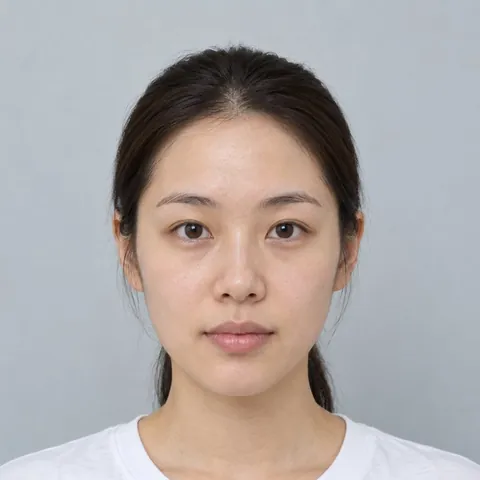
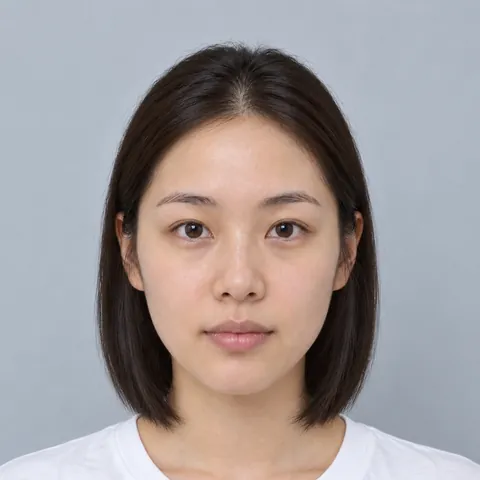
Existing demo images. A styling simulation, not a prediction. The report includes 6 optional AI renders; each is generated on request.
A round face is short for its width, with a soft jaw and cheekbones that do not stand out. Every good haircut for it does the same job: add vertical, remove horizontal. Here is what that means in actual cuts, for women and for men.
Face length divided by cheekbone width sits around 1.35, against a reference oval of 1.45: the face is a little short for its width. Jaw width over cheekbone width is about 0.82, slightly wider than oval, and the jawline itself is curved rather than angled. Forehead over cheekbone is about 0.87. The outline has no corners and no obvious widest point, which is why it reads as a circle even though it is never actually one.
Two things follow. The face is short, so the hair should add length. The face is soft, so the hair should add lines. Cuts that do both are the ones people describe as "slimming"; the word is misleading, because nothing gets slimmer, but the outline gets longer and the eye follows the vertical.
Round is also the shape most often mis-identified. A soft jaw shows up on heart faces too, and a short face shows up on some ovals. Measuring beats guessing: the face shape tool reads the ratios off a photo and reports which shape you are leaning toward.
Vertical in, horizontal out. Height on top and length below the chin add vertical. Volume at the cheeks, blunt lines at the jaw, and anything that ends at the widest point of the face add horizontal. When two cuts look equally good in the mirror, the one that keeps more of your hair off your cheeks is the right one.
| Cut | What it is | What it fixes |
|---|---|---|
| Long layers, deep side part | Past the collarbone, layers from the chin down | The most reliable cut here: length pulls the eye down, the deep part stops the face being framed symmetrically |
| Angled lob | Ends below the chin, front longer than back | The angle draws a downward line each side. Avoid the version that stops at the cheek |
| Long side-swept fringe | Temple to opposite brow | A diagonal that still leaves forehead showing, so the face keeps its height |
| Volume at the crown | Root lift on top, sides kept flat | Adds length directly — but only if the sides stay flat, or the whole outline just gets bigger |
| High ponytail | Worn high, sides pulled back | Height and narrowing at once. Leave face-framing pieces below the chin, not at the cheek |
| Waves from the chin down | Roots straight, wave starts at chin | Waves add width, so they belong below the widest part. Starting at the temple is the classic mistake |
| Asymmetric pixie | Longer one side, top swept at an angle | Short hair can work if it is asymmetric; a symmetric pixie emphasises the round |
| Half-up with height | Top half up with volume, rest down | Combines the vertical of an updo with the length of loose hair |
The most reliable cut for a round face. Length past the collarbone pulls the eye downward; a deep side part puts a diagonal across the forehead and stops the face from being framed symmetrically, which is what makes it look rounder. Layers should begin at or below the chin.
A long bob that ends an inch or two below the chin, with the front cut slightly longer than the back. The angle creates a downward line on each side of the face. The bob to avoid is the one that stops level with the chin or cheek; that one draws a horizontal exactly where the face is widest.
A fringe that starts at one temple and sweeps across to the opposite brow. It adds a diagonal and leaves part of the forehead visible, so the face keeps its height. Pair it with a side part on the same side.
A little lift at the root on top, from a blow-dry or a small amount of backcombing, adds length directly. Keep the sides flat while you do it; volume everywhere just makes the whole shape bigger.
A ponytail worn high on the head adds height and pulls the sides back, which is both halves of the principle at once. Leave a couple of face-framing pieces out at the front, cut to fall below the chin, not at the cheek.
Waves add width, so they belong below the widest part of the face. Start them at chin level and keep the roots straight. Waves that start at the temple are one of the most common round-face mistakes.
Short hair can work if it is asymmetric: longer on one side, with the top swept over at an angle. A symmetric pixie with an even fringe tends to emphasise the circle.
The top half pulled up and back with some volume, the rest left down and long. Combines the vertical of an updo with the length of loose hair.
Searches for round-face hairstyles for men run at almost the same volume as for women, and the principle is stronger here because men's cuts are shorter: with less length to work with, height on top does most of the work.
Sides faded high and tight, three to four inches on top styled up and slightly back. The fade removes width at the widest point; the quiff adds the missing height. The single best-known round-face cut for men, and it earns the reputation.
More height and more polish than a quiff. Works because the volume is all on top and none at the sides. Keep the sides short; a pompadour with full sides just adds bulk everywhere.
Disconnected short sides with the top left long and pushed up or back. The contrast between the flat sides and the tall top is exactly the vertical line a round face needs.
A hard side part with the top swept across and slightly up. Adds a diagonal on top and keeps the sides tight. A safer option for offices than a full pompadour.
Volume concentrated in a strip down the centre of the head, sides kept short. Builds height without looking like a deliberate pompadour.
Not a haircut, but it matters more than any haircut for a round face: a beard that is fuller at the chin and shorter at the cheeks adds length to the lower face and gives the jaw an angle it does not have on its own. Keep the cheeks trimmed close.
How to measure the ratios by hand is in how to tell your face shape. For glasses, the same logic applies: angular frames, square or aviator, give a round face the corners it lacks.
Anything that adds vertical and takes away horizontal. For women, long layers with a side part or a lob that ends below the chin; for men, height on top with the sides kept tight. The underlying reason is that a round face is nearly as wide as it is long (length-to-width near 1.35 against a reference of 1.45), so the cut has to supply the length the outline does not.
A bob that ends at the chin or the cheek, yes: it draws a horizontal line at the widest part of the face and makes it look wider. A longer bob that ends an inch or two below the chin, cut with a slight angle so the front is longer, does the opposite and works well.
Long, side-swept fringes yes; short, straight, heavy fringes no. A heavy fringe cuts off the top of the face and makes it shorter, which is exactly the wrong direction. A fringe that sweeps across at an angle adds a diagonal and keeps some forehead visible.
A high fade or undercut with two to four inches on top, styled up rather than forward: a textured quiff, a pompadour, or a messy top. The tight sides remove width and the height adds length. A buzz cut works less well because it exposes the roundness with nothing to counter it.
Measure face length divided by width at the cheekbones. Round sits near 1.35 and has a soft jaw; oval sits near 1.45. The tool also checks the width of the jaw below the mouth, which is the awkward one to measure by hand and the one that separates round from heart.
Round is often confused with oval and heart. The scanner measures your ratios from one photo, including the mid-jaw width that separates round from heart, and tells you which shape you are closest to.
Front-facing, unobstructed, evenly lit photos work best. Your photo is analysed on your phone or computer and is never uploaded.
Your shape is a starting point. The report uses your measured proportions to explain hair and frame choices.
US$12.99 US$6.99 46% off One-time payment. No subscription, no account.
Your report link and receipt go here (optional, checkout asks too)
Next: secure checkout by Waffo, charged in USD.
Checkout could not open just now. Leave your email and we will tell you the moment it is fixed.
Got it, thanks.
Not happy within 7 days? Email us for a full refund.
Explore a sample before you decide. Your own report uses your measurements; these examples show the format, not your result.
Existing demo images. A styling simulation, not a prediction. The report includes 6 optional AI renders; each is generated on request.
Softly rectangular frames with moderate lens depth and a frame width close to the face
Excerpt from the published sampleReshape the hair silhouette with crown lift, below-jaw length, and controlled sides.