See a hairstyle before the haircut
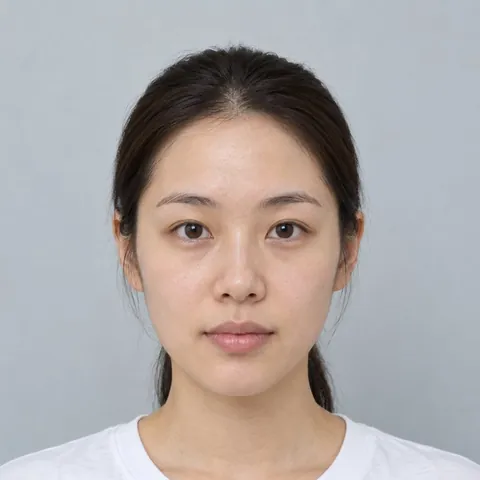
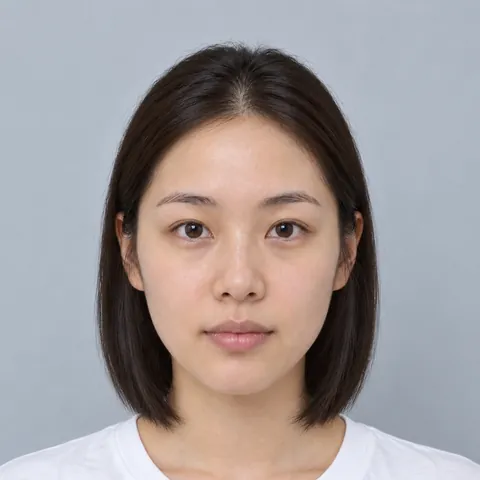
Existing demo images. A styling simulation, not a prediction. The report includes 6 optional AI renders; each is generated on request.
Oval is the face shape that most advice is written against, which is why the advice for oval itself is usually a shrug: anything works. Mostly true. What is worth knowing is which cuts keep that balance and which ones quietly give it away.
Three numbers describe it. Face length divided by face width sits around 1.45: clearly longer than wide, but not long. Jaw width divided by cheekbone width is about 0.80, so the jaw is a little narrower than the cheekbones. Forehead width divided by cheekbone width is about 0.88: the forehead is also slightly narrower than the cheekbones, but wider than the jaw. Put together, the widest point is the cheekbones, and the outline tapers gently in both directions.
That gentle taper is why oval is easy. Round faces need vertical lines because they are short; oblong faces need width because they are long; square faces need softening. Oval has no shortage to make up for, so a haircut's job is simply not to create one.
It also means oval is a wide band rather than a point. Plenty of people measure as oval while leaning toward round or oblong, and the advice for those shapes starts to matter at the edges. The face shape tool reports which way you lean; if it says oval leaning oblong, read the oblong guide as well.
Keep the face visible and do not stack height on top. Everything below follows from that. Hair that opens the face up (parted, tucked, swept back) shows the taper that makes the shape work. Hair that adds a lot of vertical volume pushes the ratio upward and starts to read as oblong; hair that piles width at the cheekbones makes the widest point wider still.
| Cut | What it is | What it does here |
|---|---|---|
| Long layers, centre part | Layers starting below the chin | The default, and for a reason: a vertical through a face that is already balanced |
| Shoulder length, soft layers | Collarbone to shoulder, layers from the jaw | The most flattering length for most ovals — the ends get lift instead of hanging flat |
| Curtain fringe | Middle-parted, swept both ways | The lightest fringe there is, which suits a face with nothing to hide |
| Blunt bob at the jaw | One length, ending at the jawline | A horizontal exactly where an oval starts to narrow. On a round face this is a mistake; here it is not |
| Pixie cut | Length and texture on top, sides close | Exposes the whole outline — only a good idea when the outline is good. Oval qualifies |
| Slicked back / wet look | All hair off the face, low bun or tail | The most honest test of a face shape, and oval passes it |
| Beach waves | Loose waves starting at chin level | Waves add width, which is neutral here as long as the volume stays below the cheekbones |
| Side-swept fringe | Long fringe across the forehead | Adds a diagonal. Useful if a fully open oval face reads too plain to you |
The default for a reason. A centre part draws a vertical line through the balanced middle of the face, and long layers that begin below the chin add movement without adding width at the cheekbones. Works straight or wavy.
The most flattering length for most ovals sits between the collarbone and the shoulder. Layers cut to start at the jaw give the ends some lift so the hair does not hang as a flat curtain. Ask for face-framing pieces that start at the cheekbone, not above it.
Parted in the middle and swept to either side, a curtain fringe frames the forehead without covering it. It is the fringe that adds the least visual weight, which is why it suits a shape with nothing to hide.
A one-length bob that ends at the jawline draws a horizontal line exactly where the oval face starts to narrow. On round faces this is a mistake; on oval it emphasises a jaw that is already in proportion. Keep it just at or slightly below the jaw rather than at the chin.
Short hair exposes the whole outline, which is only a good idea if the outline is good. Oval qualifies. Keep some length and texture on top and let the sides sit close; avoid spiking the top straight up.
Pulling all the hair off the face is the most honest test of a face shape, and oval passes it. A low ponytail or a low bun is safer than a high one, which adds height.
Loose waves add width, which is neutral on an oval face as long as the volume sits below the cheekbones. Start the wave at chin level; waves that start at the temple widen the top of the face.
A long fringe swept across the forehead adds a diagonal, which breaks up the outline a little. Useful if you find a fully open oval face looks too plain.
Men's searches for this shape are nearly as common as women's, and the principle is the same: show the outline, do not build a tower on top.
Sides tapered short, top left two to three inches and swept back or to the side. This is the cut barbers reach for with an oval face because it follows the natural taper of the outline.
A short, textured top with a slight fringe pushed forward. The fringe takes a little off the forehead, which an oval face can afford. Works with a fade or a scissor-cut side.
A defined side part with medium length on top. Gives structure without height. If the top gets long, sweep it across rather than up.
A uniform short length all over is a pure test of head and face shape, and oval is the shape that tends to pass. If you have been thinking about it, this is the shape to try it on.
Three to five inches on top, pushed back with the sides kept a little shorter. Fine on an oval face as long as the hair goes back rather than up; a tall pompadour or quiff is the one style that pushes the face toward oblong.
Oval is a wide band. Two neighbours matter most:
How to measure the three ratios yourself is in how to tell your face shape. Glasses for an oval face follow the same logic in reverse: slightly angular frames add structure to an outline that has none to spare.
There is no single best cut, which is the point of being oval: the proportions are already close to the reference (length about 1.45 times width, jaw and forehead both a little narrower than the cheekbones), so most cuts work. The ones that work best keep the face visible and do not stack height on top. A centre or side part with the hair off the face, a shoulder-length cut with light layers, or a classic short back and sides for men are all safe first choices.
Anything that adds a lot of vertical height, such as a tall quiff or a high, tight top knot, because it pushes the face toward oblong. Heavy, straight-across fringes that sit low can also make the face read shorter and rounder than it is. Neither is a disaster, but they trade away the balance you already have.
Yes, most kinds. A curtain fringe or a soft, brow-skimming fringe works well because it does not cut the face into a short block. The one to be careful with is a heavy blunt fringe worn low; it removes forehead and can make an oval face read as round.
They are the shape short hair is easiest on. Pixie cuts, cropped bobs and, for men, buzz cuts and crops all work because there is no width or length problem to correct. The only thing to watch is very short sides with a very tall top, which stretches the face upward.
Measure face length divided by width at the cheekbones. Oval sits near 1.45; oblong runs about 1.6 and above. If you land between the two, the tool will show you which one you are leaning toward, and the oblong advice about adding width at the sides starts to apply.
The scanner measures your length-to-width, jaw and forehead ratios from one photo and tells you which shape you are closest to, and which one you are leaning toward.
Front-facing, unobstructed, evenly lit photos work best. Your photo is analysed on your phone or computer and is never uploaded.
Your shape is a starting point. The report uses your measured proportions to explain hair and frame choices.
US$12.99 US$6.99 46% off One-time payment. No subscription, no account.
Your report link and receipt go here (optional, checkout asks too)
Next: secure checkout by Waffo, charged in USD.
Checkout could not open just now. Leave your email and we will tell you the moment it is fixed.
Got it, thanks.
Not happy within 7 days? Email us for a full refund.
Explore a sample before you decide. Your own report uses your measurements; these examples show the format, not your result.
Existing demo images. A styling simulation, not a prediction. The report includes 6 optional AI renders; each is generated on request.
Softly rectangular frames with moderate lens depth and a frame width close to the face
Excerpt from the published sampleReshape the hair silhouette with crown lift, below-jaw length, and controlled sides.