See a hairstyle before the haircut
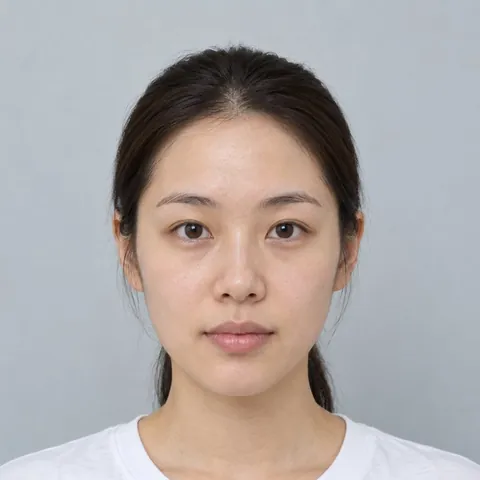

Existing demo images. A styling simulation, not a prediction. The report includes 6 optional AI renders; each is generated on request.
Thirds, five-eye width, eye spacing and face length-to-width, each compared against its reference value so you can see exactly how far off you are.
Front-facing, unobstructed, evenly lit photos work best. Your photo is analysed on your phone or computer and is never uploaded.
Understand how your measured proportions inform hair, frames and portrait choices.
US$12.99 US$6.99 46% off One-time payment. No subscription, no account.
Your report link and receipt go here (optional, checkout asks too)
Next: secure checkout by Waffo, charged in USD.
Checkout could not open just now. Leave your email and we will tell you the moment it is fixed.
Got it, thanks.
Not happy within 7 days? Email us for a full refund.
Explore a sample before you decide. Your own report uses your measurements; these examples show the format, not your result.
Existing demo images. A styling simulation, not a prediction. The report includes 6 optional AI renders; each is generated on request.
Softly rectangular frames with moderate lens depth and a frame width close to the face
Excerpt from the published sampleReshape the hair silhouette with crown lift, below-jaw length, and controlled sides.
These are common aesthetic references, not correct answers. Real faces within about 10% of a reference are indistinguishable to the eye.
The mesh vertex at the top of the head is not your hairline, so we first run the same formulas over MediaPipe's canonical face model to set a baseline, then convert your numbers onto the scale above.
The measurements and judgements on this page rest on the work below, including findings that cut against what we do. Reference values are ranges the literature reports, not targets to reach.
Thirds: hairline to brow, brow to nose base, and nose base to chin should be about equal. Five-eye: your face should be about five eye-widths across, with exactly one eye-width between the eyes. They are the two most widely used facial proportion references.
The usual claims are that face length divided by width should approach 1.6, and mouth width divided by nose width should approach 1.6. We use 1.45 and 1.5, because faces that actually read as attractive cluster there rather than at a strict 1.618.
Look at which measure it is. Thirds that run long or short are adjusted with a fringe and brow shape; five-eye deviations are adjusted with liner direction. The result card names the single measure most worth working on.