See a hairstyle before the haircut
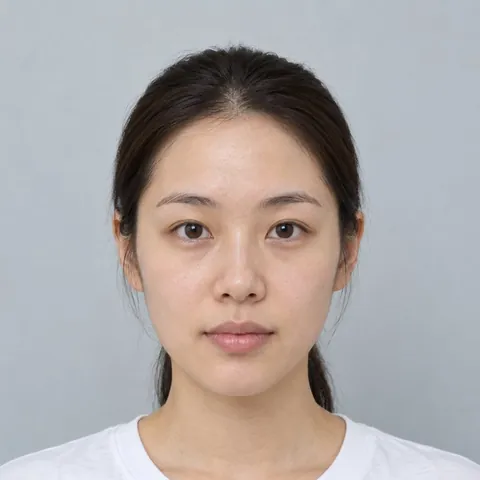
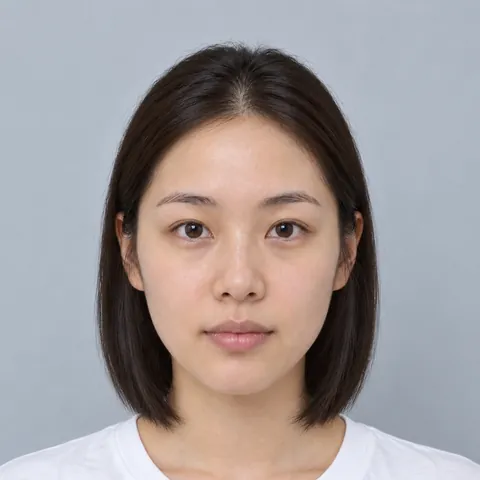
Existing demo images. A styling simulation, not a prediction. The report includes 6 optional AI renders; each is generated on request.
A diamond face is widest at the cheekbones, with both the forehead and the jaw narrower. That gives it the most defined cheekbones of any shape, and a haircut's job is to fill in above and below them, not to widen the middle further. Here is what that means in cuts, for women and for men.
Face length divided by cheekbone width sits around 1.50, a little longer than oval. Jaw width divided by cheekbone width is about 0.76, narrower than oval's 0.80. Forehead width divided by cheekbone width is about 0.80, well below oval's 0.88. So the cheekbones are clearly the widest point, and the outline narrows in both directions from there: up to a narrow forehead and down to a narrow jaw and a chin that often comes to a point.
That is where the name comes from and also where the advice comes from. The middle of the face has plenty of width; the top and bottom do not. Every cut that works for a diamond face adds width at the temples or the forehead, at the jaw, or both. Every cut that fails does the reverse: it adds width at the cheekbones, or strips it away from the forehead and jaw at the same time and leaves the cheekbones standing alone.
Diamond is often mistaken for heart, which has the same narrow jaw with a wide forehead, and for oval, which has the same taper with much smaller differences. The face shape tool measures the forehead ratio that separates diamond from heart and reports which you are leaning toward.
Fill in above and below, leave the middle alone. Fringes and volume at the temples widen the top; layers, flicks and length at the jaw widen the bottom; both make the cheekbones read as part of a balanced face rather than its only feature. Volume that sits at cheekbone level, or hair pulled tight away from the face, does the opposite.
| Cut | What it is | What it fixes |
|---|---|---|
| Curtain fringe + jaw layers | Fringe on top, layers flicking out at the jaw | The most complete cut: widens forehead and jaw at once, so the cheekbone reads normal |
| Chin bob with a fringe | Ends at the chin, forehead covered | Fills both gaps in one cut. The bob a round face should avoid is the one this face wants |
| Side-swept fringe, sides tucked | Fringe across the top, hair tucked at cheekbone level | Width at the top, nothing added at the middle, length still free below the ear |
| Soft full fringe | Covers most of the forehead, soft edges | The strongest single fix for a narrow forehead — keep the rest of the cut simple |
| Layers flicking out at the jaw | From the jaw, styled outward not inward | Outward ends add width at the jaw; inward ends narrow it further, which is the last thing this face needs |
| Waves from the ear down | Start at the ear, not the temple | Waves at the temple widen the cheekbone and make the shape more extreme |
| Deep side part, temple volume | One side fuller over the temple | Widens the top of the face. Works with or without a fringe |
| Half-up, sides left down | Take from the crown only | Pulling the sides back tightens the whole outline onto the cheekbones |
The most complete cut for a diamond face. The fringe widens the forehead; layers that end at the jaw and flick outward widen the bottom; between them the cheekbones look proportionate. This is the one to ask for if you take a single style from this page.
A bob that ends at the chin puts width exactly where the jaw narrows, and a fringe covers the forehead. On a round face this bob is a mistake; on a diamond face it fills the two gaps at once.
A long fringe swept across the forehead adds width at the top; tucking the hair behind the ears at cheekbone level keeps the middle from getting wider. Leave the ends loose below the ear so the jaw still gets some width.
A fringe that covers most of the forehead, cut soft at the edges. The strongest single fix for a narrow forehead. Keep the rest of the hair simple so the fringe does the work.
Face-framing layers that begin at the jaw and are styled outward, not inward. Outward ends add width at the jaw; inward ends narrow it further, which is the last thing this shape needs.
Waves add width wherever they sit, so start them at the ear rather than the temple: below the cheekbones, around the jaw. Waves that start at the temple widen the cheekbones and make the shape more extreme.
A deep side part lets one side of the hair sit fuller over the temple and forehead, which widens the top of the face. Works with or without a fringe.
If you pull some hair up, take it from the crown only and leave the sides and front down. Pulling the sides back tightens the whole outline around the cheekbones.
Diamond-face searches for men are among the least competitive of any face-shape query, and the advice is unusually consistent: cover some forehead, keep weight at the sides.
A crop with the top left longer and pushed forward onto the forehead, edges left uneven. The fringe widens the top of the face; the texture keeps it from looking like a helmet. Pair with a low taper, not a high fade.
Two to three inches on top swept across and slightly forward so the hairline is partly covered. A side part adds a diagonal; the forward sweep covers forehead. The most versatile cut for this shape.
Whatever the top, keep the sides scissor-cut or tapered low, with some weight left above the ear and at the jaw. Width there balances the cheekbones. A high fade strips it away and leaves the cheekbones as the only wide point.
Three to five inches all over, worn loose with the front falling toward the forehead and the sides sitting full. Works especially well with any natural wave.
Natural curl adds width at the sides without effort. Keep the front curls over the forehead rather than pushed back, and let the sides sit full around the jaw.
The single most effective change for a diamond face on a man: a short, full beard that follows the jaw adds width exactly where the face narrows. Keep it trimmed close on the cheeks so it does not add to the cheekbones.
How to measure the three ratios yourself is in how to tell your face shape. Glasses follow the same idea: oval, cat-eye or top-heavy frames add width at the brow line and soften the cheekbones.
Anything that adds width at the forehead and at the jaw, the two places a diamond face is narrow. For women, a fringe plus layers that flick out at the jaw, or a chin-length bob with a curtain fringe; for men, a fringe or textured front with the sides left fuller at the jaw. The ratios explain it: cheekbones are the widest point, with the forehead about 0.80 and the jaw about 0.76 of that width, so the cut fills in above and below rather than adding to the middle.
Yes, more than any shape except oblong. A fringe covers part of the narrow forehead and visually widens the top of the face, which makes the cheekbones look less like the only wide point. Curtain, side-swept and soft full fringes all work. Avoid pulling the hair straight back off the forehead.
Volume or width at the cheekbones, and anything that pulls hair away from both the forehead and the jaw at once. A slicked-back style with tight sides is the worst case: it exposes the narrow forehead, tight sides narrow the jaw, and the cheekbones become the only thing visible.
A textured fringe or a side-swept front with medium length on top, and the sides tapered low so there is some fullness around the jaw. Searches for diamond face hairstyles for men are among the easiest face-shape queries to rank for and the advice is consistent: cover some forehead, keep weight at the sides. A short beard adds width to the jaw and is one of the most effective changes for this shape.
Both have a narrow jaw and pointed chin. The difference is the forehead: a heart face has a wide forehead, roughly as wide as the cheekbones; a diamond face has a narrow forehead, about 0.80 of the cheekbone width. Measure forehead width divided by cheekbone width, or let the tool do it from a photo.
The two shapes share a narrow jaw and differ at the forehead. The scanner measures your forehead-to-cheekbone and jaw-to-cheekbone ratios from a photo and tells you which you are closest to.
Front-facing, unobstructed, evenly lit photos work best. Your photo is analysed on your phone or computer and is never uploaded.
Your shape is a starting point. The report uses your measured proportions to explain hair and frame choices.
US$12.99 US$6.99 46% off One-time payment. No subscription, no account.
Your report link and receipt go here (optional, checkout asks too)
Next: secure checkout by Waffo, charged in USD.
Checkout could not open just now. Leave your email and we will tell you the moment it is fixed.
Got it, thanks.
Not happy within 7 days? Email us for a full refund.
Explore a sample before you decide. Your own report uses your measurements; these examples show the format, not your result.
Existing demo images. A styling simulation, not a prediction. The report includes 6 optional AI renders; each is generated on request.
Softly rectangular frames with moderate lens depth and a frame width close to the face
Excerpt from the published sampleReshape the hair silhouette with crown lift, below-jaw length, and controlled sides.